Showing posts with label symbolism. Show all posts

Thursday, March 12, 2009

Contrasting Reactions to Exposés on TV

I'd like to examine something of interest to myself by way of contrast.


Although it is not critical to understanding the contrast I'm about to present, I feel some desire to frame what I'm about to say by pointing out that I'm formerly (quite recently) a member of The Church of Jesus Christ of Latter-day Saints, and that my religion is currently a blend between several things, still including several aspects of Mormonism.


Mormonism and Masonry are subjects that have often been treated together, by both friendly and "anti-" sources.  I want to look at a different aspect of comparison.  In recent years, Freemasonry has been featured in several television programs.  There has been at least one program that has purported to accurately depict the Master Mason Degree, presumably exposing the Masonic secrets held sacred to members of the Fraternity to the general public.


Next Wednesday, HBO plans to air a new episode of "Big Love" which depicts portions of the Mormon Temple Endowment, in an accurate re-creation of an Endowment Room and Celestial Room and with accurately depicted Temple Clothing being shown.  For those of you who don't know, "Big Love" is a show about a Fundamentalist Mormon family living in Utah and dealing with life among their Latter-day Saint neighbors.  And for those of you who aren't familiar with Mormonism, the depiction of the Temple ordinances and even the Temple clothing is considered taboo in mainstream Mormonism, that's why the producers of the show had to hire an ex-Mormon to help them put together the set and props.  The producers have promised that they've done their homework and will be doing an accurate portrayal.


A common thread here is that both shows may be characterized as being created by people who are unsympathetic towards the organization whose secret rituals they are "exposing."  Both programs are merely putting together information, the bulk of which has been in print since the mid-1800's, and as neither has been made by members of these organizations, the creators of these programs have apparently not broken any sacred obligations to come up with their respective footage.


So I've set the stage and shared what is in common, now for my contrast:  Masons have had mixed reactions to the exposé of the Master Mason Degree on Television, and I get the impression that, by and large, the Craft has welcomed the publicity created by such a program.  However, when Latter-day Saints are faced with the same type of situation, they seem to have taken a different route entirely in dealing with things.  The Church put out a press release entitled "The Publicity Dilemma"  which at the time of this writing is front-and-center on the Church's main lds.org website, and the majority of opinions online seem to be very negative towards HBO's actions.


I am curious what it is about the scenarios or common psychological make-ups of these two groups to cause them to react so differently to such a similar situation?  Why aren't the Mormons able to channel this potential attention into a positive force for their growth, when the Masons have been able to succesfully do so in at least a handful of cases that I'm aware of?  On the other hand, is the easy-going attitude of the Masons indicative of a general lack of respect for their own solemn ceremonies, or is this response consistent with the best and highest Masonic ideals?  Or, does the religion vs. fraternity comparison make this equivalent to comparing apples to oranges -- if so, why?


A closing plea, please be respectful to the Latter-day Saints in any comments left in relation to this post.  They are getting enough flack as it is from other sources.

Thursday, January 01, 2009

Why is a branch of the KKK trying to use our symbol?

Why is a branch of the KKK trying to use the Triple Tau, a symbol whose historic evolution is well documented to be part of the Holy Royal Arch Degree of the Antients Grand Lodge of England?  Not only that, but they are using explanations of the symbol on their web site which are taken from Masonic authors.

I really think they should come up with their own symbol.  Masonry teaches the Universal Brotherhood of Man, and ought to regard all men as equals regardless of race.

Friday, December 26, 2008

The Temple and its Sacred Altars

The Most Excellent Master, or Sixth Degree in the American York Rite, celebrates the Completion of King Solomon's Temple.  Four things are set in place in this degree.  The cap-stone is placed into one of the principal arches of the Temple, completing the building. The ark is safely seated within the Holy of Holies, and, after King Solomon offers the dedicatory prayer, fire descends upon the Altar of Sacrifice and the Shekhinah also appears. The lecture of the degree talks to us specifically about building our own inner or spiritual Temple, and draws our attention back to the progress we have made in the preceeding degrees.

Let us review the various Degrees and observe how the Altar of Freemasonry represents the various Altars of King Solomon's Temple as we progress through the degrees.

We are taught that Entered Apprentice Masons hold their meetings on the ground floor of King Solomon's Temple. The ground floor is the Courtyard, where the Altar of Sacrifice is located. It was upon this Altar that the Sacred Fire from Heaven descended and consumed the Sacrifice at the dedication of Solomon's Temple.  Once burning, the Fire from the Altar of Sacrifice is never extinguished.  It is carried into the Holy Place and used to light the Lampstand and its coals are used to kindle the Incense Altar, and is carried by the priests in censers whenever the Tabernacle must be moved.  It is the manifest presence of that Eternal Flame which never goes out, the Aur Ein Sof (Light Without End) of the Kabbalists, universally depicted over the Master's Chair in Freemasonry as the letter G.

Fellow Craft Masons hold their meetings in the Middle Chamber of King Solomon's Temple.  In the Middle Chamber we find the Incense Altar, where incense burns both day and night before the veil, and prayers ascend like smoke up over the veil into the Sanctum Sanctorum or Holy of Holies.  We also find the Seven-branched Lampstand here, and the Table of Shew-bread which are symbolized by the Wages of a Fellowcraft Masons, corn(wheat), wine and oil, and which, in the Temple, provided sustenance for the priests.

Master Masons hold their meetings in the Sanctum Sanctorum, or Holy of Holies.  Here we find an "Altar" called the Ark of the Covenant, which is a small chest or coffer, made of Acacia wood, and overlaid inside and outside with gold, into which were placed the tablets of the Law (both the broken and the unbroken sets), a pot of Manna, and Aaron's Rod which budded and blossomed with almonds.  A copy of the Torah was also kept within the Holy of Holies, next to or possibly upon the Ark.  The Jewish High Priest, standing before this Ark, or Altar, would offer prayer for his own sins and the sins of his people, and this was also where, according to Masonic legend, Hiram Abiff offered his prayers each day during the building of the Temple.

Upon the lid of the Ark (called the Mercy Seat) rested two additional Cherubim, made of the same piece of beaten gold as the Mercy Seat, facing inward, with their wings covering over and supporting the Ark.  The Holy Writings describe the Cherubim as having four faces, those of a Lion, an Ox, a Man and an Eagle, with one face towards each direction. These same creatures were also depicted on the standards of the four principal tribes of Israel, as described in the Royal Arch, or Seventh Degree, and when the Israelites were traveling in the wilderness for forty years, in their Encampment, it was these very same four tribes, Judah, Ephraim, Rueben, and Dan, who respectively camped directly to the East, West, South, and North of the Tabernacle.

Through a study of the Volume of Sacred Law, particularly Leviticus chapter 16, and also of the Talmud, we may learn a great deal about the ceremonies in which the High Priest engaged. He would enter the Holy of Holies on only one day of the year, Yom Kippur, and upon entering, he would pass beneath the Wings of the Cherubim. The Cherubim referred to are the large ones which stretched from one wall of this chamber to the other, touching the tips of their wings together in the midst of the room, as described in the Royal Master, or Eighth Degree.  After entering, the High Priest would place a golden censer filled with coals and incense upon the floor before the Ark of the Covenant, and retreat outside the room, where he would offer a prayer before the vail with hands uplifted before YHWH.  It was on this occasion, during this prayer, that he was permitted to speak aloud the Great and Sacred Name of Deity, and upon offering this prayer, the Shekhinah or Divine Presence would descend and rest above the Mercy Seat of the Ark of the Covenant.  He would then re-enter the Holy of Holies, and indirectly behold the Shekhinah through the hazy cloud of smoke which had emanated from the his Golden Censer and filled the room. This smoke was so thick that he was required to use his hands to block the smoke from entering his nostrils.  As also described in the Royal Master degree, as well as in the Sacred Writings, the Bath-Kol (Literally, "Daughter of Voice," in Hebrew), or Voice of God Unseen issued forth from between the wings of the Cherubim and was heard by the High Priest.

You've probably heard the analogy that our body is a Temple, a house for the Spirit of God to dwell in, or that we are to construct "a spiritual building, pure and spotless, fit for the habitation of him who dwelleth only with the good."

What follows is speculative, and is intended to stimulate your own thoughts on this subject:  I want to compare the events of the Most Excellent Master degree to both the physical and spiritual aspects of the human body and see if the completion of the Temple can be represented there in the same manner.  I will begin by suggesting that our Heart (or possibly, our Heart and Stomach) represents the Altar of Sacrifice.  Physically, the heart is the center of our body's blood system, and blood is the primary ritual element of the sacrifices which were performed in the Temple.  The blood from the sacrificial animals was placed upon the horns of the Altar of Sacrifice, and was also carried into the Holy Place and placed upon the horns of the Incense Altar.  Scriptures frequently relate Fire to the heart.  Psalm 39:3, for example, reads "My heart was hot within me, while I was musing the fire burned: then spake I with my tongue."  Jeremiah 20:8-9 reads "For since I spake, I cried out, I cried violence and spoil; because the word of the LORD was made a reproach unto me, and a derision, daily. Then I said, I will not make mention of him, nor speak any more in his name. But [his word] was in mine heart as a burning fire shut up in my bones, and I was weary with forbearing, and I could not stay."  Luke 24:32 says, "And they said one to another, Did not our heart burn within us, while he talked with us by the way, and while he opened to us the scriptures?"

As I mentioned, some of the blood was carried in to the Incense Altar, and the Psalm also said, "then spake I with my tongue."  Our throat has an Incense Altar within it, consisting of the tongue and also the larynx, or voicebox, by which we create speech and offer prayers. The throat is also where air enters our body, like the smoke ascending up from the incense altar and over the vail.  If our voice sends forth the prayer, and afterwards we pass through the vail into the Sanctum Sanctorum of our head where we stand in waiting for an answer to our prayer, would not the daughter of voice, the Bath-Kol, be that still small voice (see 1 Kings 19:11-13) of God, speaking directly to our mind. Would not the greater Cherubim reaching across the room be the eyes, whose optic nerves, like wings, meet in the middle of the Holy of Holies, and would not the lesser Cherubim upon the Ark, be our ears, whose canals lead inward, covering over and supporting the mercy seat?  The Bath-Kol is the Voice of God which issues forth from between the wings of these Cherubim and enters our thoughts as divine inspiration.  Perhaps the smoke of our Golden censer, is the temporary closing of our eyes and ears to outside sensory distractions so that we can listen for the Bath-Kol.  Perhaps, like the High Priest, we may invoke the True Word (not the Royal Arch Word, but that which it represents), and summon the Shekhinah to appear in our Holy of Holies to give us direction.  This direction is not identical to our own thoughts, but is added unto them, mixing with them.  Neither is it identical to that wisdom which descended to rest upon Solomon in the Past Master, or Fifth Degree, represented by King Solomon's Crown or the Top Hat of the Master.  But before we are to hear the Bath-Kol, we must ensure that the building is Completed, that the Keystone is set into the Principal Arch of the Temple, that the Ark is Safely Seated, and that there is a Fire burning upon the Altar of our Heart.  Remember, the Fire upon the Altar of our Heart should be continually burning, and the Incense should be offered both day and night, but the Shekhinah is only manifest when invoked by use of the Great and Sacred Name.

So, what do the Keystone and the Principal Arch represent in our bodily Temple?  How can we prepare our inner Temple for this event?   And, why must this event transpire before we are permitted to travel into foreign countries, or to go into that undiscovered country from whose borne no traveler returns, the privilege finally bestowed upon the craftsmen at the dedication of the Temple?

Please divert all comments on this article to the copy posted on the Reames Chapter #28 R.A.M. Website.

Tuesday, December 16, 2008

The Lesser Lights as Archetypes

I've been doing quite a bit of study about Masonic Officers today, including the Symbolic Lodge, the Chapter of Royal Arch Masons, the Council of Cryptic Masons, and the Commandery of Knights Templar.  My study of the Commandery was particularly difficult to undertake since I am not a member of that order, and had to rely on intense study of various writings to glean the names, duties, and positions of the officers.

I've come up with a theory, or a method of comprehending the officers in all these orders.

My theory is that there are only three archetypal officers, represented by the three principal officers:  The Worshipful Master, Senior, and Junior Wardens.

We are told that anciently, Master Mason Lodges consisted of three members only and held their meetings in the Holy of Holies.  In modern Lodges, it is typically deemed impossible to open with only three officers, and in my jurisdiction, at least, it is constitutionally prohibited.  We need at least five to form a quorum to open for business. Nonetheless, there probably was a time in the history of the craft when a lodge of three only would have opened.  I have tried to envision how this would work, and with the help of the other York Rite bodies, the Council of Cryptic Masons, in particular, I believe I see how this would have been done.

I have named the archetypal purpose of the three officers: "Master," "Guardian," and "Guide."

In a Symbolic Lodge, each of the principal officers has many of their duties delegated to subordinate officers:

The Worshipful Master fulfills the "Master" archetype.  His duty is delegated to the Lecturer or Orator, as well as the Chaplain, the Secretary, and the Treasurer.   I would like to call attention to the letter "G" displayed above the Master's chair in most lodges.  This letter should symbolize the source for him to receive instruction and orders that he conveys to the brethren so that they may perform their labor.  The Master gives the Apron to each new Entered Apprentice, presents us with Working Tools and teaches us their uses, and gives us Masonic instruction as we progress.

The Senior Warden fulfills the "Guardian" archetype.  His duty is delegated to the Junior Deacon or Inner Guard and the Tyler.  He is the officer which the Master consults with during the process of "purging the Lodge," a procedure which ensures that only Masons of the appropriate rank are present prior to opening.  In the Council of Cryptic Masons, the officer seated in the West is actually called the "Captain of the Guard" and when the Master issues orders for the room to be secured, the orders pass through the Captain of the Guard to the "Steward" (who functions exactly like the Junior Deacon or Inner Guard and is stationed at the same place, inside the door.)  This process of relaying instructions more clearly demonstrates the delegation which I am sure at one time was also present in the Symbolic Degrees (and may be still present in some jurisdictions.)

The Junior Warden fulfills the "Guide" archetype.  His duty is delegated to the Senior Deacon and to the Stewards or Junior Deacon (whichever of these officers is responsible for preparing candidates and bringing them to the door of the Lodge, in your particular jurisdiction.)   In the Council of Cryptic Masons, the officer seated in the South is called the "Conductor of the Council" and his duties are equivalent to those of the Senior Deacon, including that of opening and closing the VSL.  He may be assisted by a Marshal in some jurisdictions.  I will point out that the VSL is a symbol that we are specifically told should be the "guide" of our faith.  It is therefore a fitting symbol to be in the care of the officer whose duty it is to be our Guide.  In the Symbolic Lodge, the Junior Warden rarely acts as a guide directly, but he is the one who gives us directions from the Master, calls the craft from Labor to Refreshment and superintends us under his immediate care.  It is important to note the distinction between the "Master" and the "Guide" archetype.  The Master gives us instructions for our labors.  But the Guide actually walks with us on our journey, and often speaks in our behalf, and can often give an answer "for us" even if we "have it not."

Now, with this understanding, you should be able to think about how a Lodge would have opened with only three officers:

The "Master" would ask the "Guardian" to secure and purge the lodge, and then quiz him as to the particulars of the Master Mason degree, and as to the duties of the officers.  The Master would then issue the Order to open Lodge.  The "Guardian" would inform the "Guide" of the Master's intention, and the "Guide" would call upon the other craftsmen (if any) to look to the East.  The "Master" would lead them in the secret work, after which, the battery would be given.  Finally, the "Master" would offer prayer, after which he would declare the Lodge opened, and ask the "Guide" to attend the altar and display the Lights.  The "Master" would proceed with business, keeping a thorough record of all transactions.

To close Lodge, the "Master" would quiz the "Guardian"as to the duties of the officers, and then issue the Order to close Lodge.  The "Guardian" would inform the "Guide" of the Master's intention, and the "Guide" would call upon the other craftsmen (if any) to look to the East.  The "Master" would lead them in the secret work, after which, the battery would be given.  Finally, the "Master" would offer prayer, after which he would declare the Lodge closed, and ask the "Guide" to attend the altar and close the Lights.

In Royal Arch, Cryptic Masons, and Knights Templar, the executive powers of the Principal Officers is consolidated into a governing Council which is seated in the East, while many physical duties of these officers are delegated to others:

In the Chapter of Royal Arch Masons, the Excellent  High Priest delegates some of his executive and instructive administrative duties to the King and Scribe, who all fulfill the "Master" archetype together (with the Treasurer and Secretary.)  The Captain of the Host, the Royal Arch Captain, the Three Masters of the Veils, and the Sentinel are delegates of the "Guardian" archetype, while the Principal Sojourner is a delegate of the "Guide" archetype.

In the Council of Royal and Select Masters (or Cryptic Masons), the Illustrious Master and Deputy Master fulfill the "Master" archetype together.  The Principal Conductor of the Work still fulfills aspects of the "Guide" archetype by proclaiming the time for refreshment and labor, but most of the "Guide" duties are delegated to the Conductor of the Council (and sometimes to a Marshal).  The Captain of the Guard, the Steward, and Sentinel are delegates of the "Guardian" archetype.

In the Commandery of Knights Templar, the Eminent Commander, the Generalissimo, and the Captain General form the administrative operations of the "Master" archetype together.   The Prelate forms an additional layer of the "Master" archetype and is said to "preside over the Royal Arch Council" which equates him to the Excellent High Priest of the Chapter.  The duties of the "Senior Warden" and "Junior Warden" correspond with those of Cryptic Masonry's "Captain of the Guard" ("Guardian" archetype) and "Conductor of the Council" ("Guide" archetype), and in following the Excellent High Priest analogy, they would correlate with the positions of King and Scribe in the Royal Arch.  The Warder, the Guards, and the Sentinel are also extensions of the "Guardian" archetype.  I'm not aware enough of the duties of the Standard Bearer and Sword Bearer to comment on how they correlate to these archetypes.

As a closing thought, the Master, Guardian, and Guide archetypes might extend far beyond the structure of Masonry into other realms.  They can be found in nearly every fairytale or fantasy story, as well as in theology and religion:  A Christian Mason, for example, might find that these archetypes can be applied to the Father (Master), Son (Guard), and Holy Ghost (Guide).

I hope you found this subject interesting!

Sunday, July 20, 2008

More Masonic Clipart

Ok, so I went a little crazy and stayed up all night drawing more Masonic Emblems:

(See the Full Collection Here)

The Order of Knight Masons (Top Left)
The Order of the Red Branch of Eri (Bottom Left, part of Allied Masonic Degrees)
Holy Royal Arch Knight Templar Priests (Center)
The Red Cross of Constantine (Top Right)
York Rite Sovereign College (Bottom Right)

Monday, June 02, 2008

The Path

Hot on the heels of some wonderful prose by Traveling Man, I have decided to share a poem I wrote back in April. It has some layers to it that need to be peeled away. This is one where I pretty much let the pen do the writing for me. Now, without further adieu,

The Path, by Jeff Day.
(April 30, 2008)

Three ears wane in the old fountain, where twenty fish to feed.
   A quail to quell the sounding bell, high in the upper plane.
Fifteen priests from diverse lands convene to hear the plea
   of a young lad beckoning to free the restless tree.

Ages have expired since it last did take a breath.
   Twelve holy fruits it bore, and twelve leaves formed its dress.
"My mother and my father both have eaten from this tree.
   Why then dost thou fear it; why keepest it from me?"
"Our ruling is immaculate," the Aged Ones proclaimed,
   "but those who've followed after us have not held it esteemed."

Beasts of pain bearing angel-bane walk on the fire scorched path.
   They fight the light in brilliant might, with condemnation, wrath.

"To you we grant the power now to make our wishes so;
   to sow the ancient seed so that these fruits may forward go.
Pluck from off the tender lofty branch a glist'ning pod!
   So sweet, so dear, partake, young man, and make of thee a God."
"But if I do as thou hast said, of twelve fruits, one I'd taste,
   and one eternal fate I'd choose. Eleven shall I waste?"

Ten vultures loom o'er certain doom, as permeates the ring.
   Below, five row against the flow while others work in vain.
'Til harvest season next year round the tree shall stand depleted,
   for twelve were needed, twelve were found. One round completed.

Friday, May 30, 2008

Google's new branding and favicon - "Little G"

For those of you who use Google, you may have noticed today that their favicon changed. That's the little icon that appears in the location bar and on the tabs where a Google site is opened.

Why am I posting about it here on my Masonic blog? Because anyone who is observant enough to notice such a small change really ought to study the history and symbolism of Freemasonry, they would find it fascinating! In fact, Masons have used the "Big G" as part of their Logo for quite a while, as pictured here.

Does Google's change to the little G represent a sign of humility, a stepping away from territory that clearly has belonged to us Masons since before Sergey Brin and Larry Page even had grandparents, or does the little G represent a new, modern trend that we should take notice of and follow along with, as well?


Well, what do you think? I kind of like it.

Thursday, May 29, 2008

Response to "Adventures in Skirt Masonry"

Our Brother over at Masonic Minute made a post last night about what he termed "Skirt Masonry" (referring to the appendant bodies which admit women, not to women Masons, Co-Masonry or anything of that sort.) He wrote:
"Some hold these organizations in very low regard. They may even have wives who are members, but they are “Blue Nose” Masons who see no real reason for the existence of Skirt Masonry. Blue Nose Masons have no humility and are usually in bad marriages with nasty wives. Of course, I am painting with a broad brush. I don’t think there are any nasty Masonic wives out there at all. But you get the idea."
With all due respect, I feel that this brother has gotten it all wrong. My wife explained this to me at a prior date, so I have to give her credit for these thoughts, but allow me to explain:

To begin, we must talk a bout the men.

There are a certain number of men to whom Masonry appeals, for all of the ostensibly "right" (or perfect) reasons. The life-changing and transformative experience of initiation, the spiritual insights the ritual provides, the juvenile if not genuine thrill of being part of a secret society, the philosophical discussions we might have with other members, etc. Sure, there are other reasons as well which are just as valid, but most of them could be fulfilled by some other type of worthy organization, such as church or rotary. But Masonry offers this unique thing, which we as Masons, generally have an affection towards.

In its boom days Masonry appealed to about 50% of the men in my community. I would say that Masonry served them well, and they got what they wanted out of it, but it was a convenient match, not because it was right for them but because everyone else was doing it and it was prime entertainment and fellowship. Of such a large number it undoubtedly richly appealed to some of the men, and it was those men who rose to positions of high esteem in Masonry and became well known for their fraternal endeavors. But today, we have a different picture. I would venture a guess that Masonry today appeals in that "perfect" way to about 60% of its members. And only half of those are daring enough to admit it, because the other 40% aren't really interested in the esoteric/occult interpretations of such like myself. Part of this is generational. We still have people left over from the last membership boom, who got something good out of Masonry in spite of it not being a perfect match.

Lets pretend. I live in a city of roughly 20,000 people. Approximately 10,000 of those should be men. Of those, we have about 200 Masons, at least 200 who are on our Trestleboard mailing list - I haven't consulted the Secretary for exact numbers. Of those 200, about 40 are active in some organization and about 20 are regularly active in Blue Lodge. Of those 20, I will be generous and assume that 10 have that "perfect match." This is 10 out of 10,000, or 0.1%. Now, that isn't a fair number for what I'm going to say, but it gives us some perspective. There are good men out there who would make a perfect match to the fraternity whom we just have not located yet. I will be generous and assume that 5% of all men are perfect matches to Masonry. That means that if we reach our intended audience we should have 500 Masons in this city.

Now lets talk about women. As pointed out above, there are approximately 50% men and 50% women out there. So if we were trying to get women interested in something akin to Masonry in some significant way, and setting aside the inherent differences between the male and female mind, we could presume that the same amount of women would be a perfect match. So there would be 500 women in this city interested in such things.

Now lets talk about men and women. Men and women get paired up in marriage or a relationship because of several reasons, lets use "love" and "common interests" as two possibilities. We will presume that the mysterious love outweighs other reasons. So lets say "common interests" only explains 20% of the marriage/partner relationships out there. Since the appendant organizations usually accept at least the wife, widow, mother, daughter, or sister of a Mason, lets simplify this by saying that each Mason has exactly 4 close female relatives (most probably do not have this many) and lets designate their potential interest levels as:

wife/widow - 20% (common interests)
mother - 30% (she was the genetic reason you're interested)
daughter - 50% (she may genetically inherit your interests)
sister - 50% (she had the same parents and is just as likely as you to be interested)

This adds up to 150% or 1.5 potential women joining an organization per man. Right? Wrong.

There are 10,000 women in the community. Of those, we have already determined that only 500 would be interested in these things. But if each man only has a family relation to four women, that means 500 men * 4 = 2000 women we are actually in contact with, and even then only if we have already reached out to all eligible men in the community. Out of those 2000, women if we just play the numbers straight and take that 5% who are perfect matches we get 100 women, but again that is only if all eligible women in the sub-community have been reached. In reality, the number of men is 200. 200 * 4 = 800. 5% of 800 is 40. But that's counting people who are inactive. 40 men out of the 200 we have are actually active, that's a 20% activity level. If only 20% of the women are active that makes 8 women. Granted, women may be more likely to be active than men, especially the stay-at-home generation who want to get out and do something social, so perhaps twice as likely. That would be 16 women. That is where we might stand today. Do my numbers reflect your own? 16 women active in OES or Amaranth compared to 40 men active in Blue Lodge, Scottish Rite, York Rite, or Shrine. Remember not to count those traveling from outside of the city population - If you want to do that, add up the populations of all the cities that feed into your organizations and run them over again.

Now lets look at something else. In Masonry we currently have a generational gap in most places. There is a thin area which currently consists of the people approximately ages 30 to 50. We have some younger people like myself who are starting to come into the Fraternity, and we have a lot of our beloved old-timers. The numbers may look different than they really are, because a number of the old-timers are too old to actively attend lodge any more, and so the younger among us get more representation than we really have by the books. Fortunately, Masonry is founded on universal, enduring principles which provides a bridge between the generations, and young men like myself have no problem chumming around with the older Masons. The women, however, have a significant problem. They have, at least in my community, made ladies formal dresses part of the routine, and these dresses have nothing whatsoever to do with the younger generation. My wife would look good in the skirt pictured at the right, and while she may be slightly shy about wearing something like that in public, she would do it. She wouldn't be caught dead, on the other hand, in Grandma's formal. In fact, while guys don't mind dressing up in Tuxedos -- we think it is cool for whatever various and sundry reasons. The group of ladies who like to dress up in formals does not intersect very well with the ladies who are interested in esoteric studies.

My wife, Susie, is very interested in esoteric studies. Our Council of Allied Masonic Degrees holds open meetings (no ritual) over dinner for about four out of five meetings and the ladies attend with us. Susie enjoys the AMD meetings because she gets to hear about Masonry, whether it is from a historical lecture which someone gives, or from reading the publications which AMD puts out. One of the brethren there even slips her her own copy of Miscellanea each year when it comes out, against my own more prudent judgment.

But Susie is not interested in OES or Amaranth. They are unappealing. They are clubs for her grandma. She has more in common with the young lady pictures at the top of this post than with the members of OES or Amaranth. At least she could talk about fashion with such girls without the talk being obsolete (not that she wants to talk about fashion! - she does not.)

Since Susie and I married, my father-in-law has also become a Mason, and even Susie's mom finds the ladies organizations unappealing for similar reasons, and she's been known to study an esoteric subject or two as well.

My message here is that OES and Amaranth have completely missed the boat. Arising during the heyday membership boom of Masonry, they have systematically eliminated the other four hundred and sixty women in today's community who might be interested in what a Masonic related group should have to offer, and they have further alienated some of those who actually are eligible.

It isn't that OES and Amaranth are bad organizations. The math simply does not work. Men cannot expect their ladies to be interested in such things, when it is so rare an interest to hold to begin with. Men should not be running or making rules for OES and Amaranth. The ladies should have ran them from the beginning and operated directly in parallel to Masonry, bringing in other various women from the community with whom they could fellowship and pursue their interests. This solution would fail for a Masonic appendant body because the Masons involved should not be hanging around with a bunch of random young women who are interested in what they do, instead of their own wives who are not. However, if the women's organizations were treated this way, the SINGLE Masons and older DeMolays may find such an organization to be a useful breeding ground, to find eligible ladies of common interests that they may wish to marry. But it creates a terribly contrived system if someone has to phase out of it upon becoming married. That's like being forced to choose between Masonry and your Spouse. Brethren, which would you choose? (Which one yells at or complains to you more often? Just kidding. The Past Masters probably do.) We shouldn't expect our ladies to make a similar choice.

What do I propose? Two things:

#1 - Eliminate all ritual from OES and Amaranth entirely. Make it a ladies social club for relatives of Masons and let them do the socialite things that they like to do.

#2 - Facilitate the creation of a ladies ritual with some real symbolic meat to it. Finance it, advertise it, get the ladies started, and do not allow men to attend it. Make it a true Parallel to Masonry, but not Masonry. Allow it to be organized and operated by women. This need not be limited to one organization. Let a few be created, and may the best one survive. They may even end up forming a men's social group some day to go along with it, for those men who they are married to who want to go down to the bar and watch football, but wouldn't be interested in Masonry.

Brethren, look at it this way: Honestly, which would you rather hang out with, Ms. Schoolgirl from the top of the post, or the Worthy Matron pictured at the right? The young ladies who are interested in esoteric studies feel the same way, well, maybe not... but almost.

(Ok, so that isn't really a Worthy Matron to the right. It's the Queen of England. I didn't want to insult any of the fine ladies who are part of OES or Amaranth by submitting them personally to this comparison.)

Tuesday, January 15, 2008

Masonic Logos - Updated

Today seems to have been a very interesting day in terms of logos, as Brother M.M.M. over at The North Eastern Corner has also updated his logo. Meanwhile, I was busy updating my high resolution Masonic Logos. There are now .eps versions of each one available for download, and the Knights Templar Cross and Crown logo has been significantly improved.

Enjoy!

Saturday, January 12, 2008

A Masonic Funeral

Today I had my first experience at a Masonic Funeral. There have been a few other opportunities since I've been a Mason, but I never seemed to be around at the time they came up. This one was held at our Lodge room for brother Bob Dove.

I learned a few new things about Masonic practice. First, at a Funeral, none of the officers wear their usual Aprons, and every brother in attendance instead wears a white apron only, also lapel pins and other emblems of the craft were subtly discouraged (although permitted), to help emphasize the important symbols at the Funeral: The white lambskin apron, and the sprig of Acacia, and to show deference and honor to the deceased.

At first I was a little surprised by this, but then I found beauty in it, as it sets the "Lodge of Sorrow" apart from our regular Lodge meetings. Ironically, this coincides with Brother Ben Rowe's blog article for Today, which is partially in response to a comment I left on another post of his. I guess Ben and I seem to be playing like a tennis match, hitting the ball back and forth.

I took the opportunity to wear my original Lambskin apron, which I received as an Apprentice, and which has been tucked away in the closet since that time. It is typical for Brethren in Oregon to wear their original Apron only during their EA, FC, and MM degrees, then save it "to be placed upon the coffin which encloses their lifeless remains." We are not forbidden to wear it again, but the Lodge provides a stack of white linen aprons in the Tyler's room, which are for use during our regular meetings. I made the decision a while back that I wanted to wear my lambskin one instead of the linen because it would mean more to me. But, alas! It was too late, or so I thought, for I had become an officer, and one day I will wear a Past Masters apron, never again to wear the plain white Apron. But now I found a chance, in this Lodge of Sorrow, so I wore my lambskin Apron. I like to think that my Apron appreciated it too, as it got to say goodbye to one of its dear friends, and get a preview of what will some day be its own ultimate destiny. (I don't believe that my apron can really see and think, just for the record.)

In closing, Brother Dove was a good man and Mason. I did not know him as well as I should have liked to, but he has always been there in the Lodge, setting a good example of friendship and helpfulness. He will be missed.

Wednesday, January 09, 2008

The Ingredients of a Masonic Degree

There are a lot of places to learn about Masonic ritual. One can experience it first hand (which is the recommended course, in my opinion), or read an exposure of the ritual either in print or on the Internet. Sometimes people are curious what is involved, but don't want to read something so shady to find out. Well, this is the right place! Here's an overview of what a Masonic Degree entails, without spoiling the experience or giving away any secrets. I will give an outline first, then details.
  1. Prologue

  2. Preparation
  3. Reception
  4. Circumambulation and Scripture Reading
  5. Approaching the Altar
  6. Obligation
  7. Instruction
  8. Apron
  9. Working Tools
  10. Return and Revestment

  11. Drama
  12. Lecture
  13. Charge
This list of events constitutes the degree proper. There are also opening and closing ceremonies that bookend the degree, with the potential for Lodge business to be conducted either after the opening ceremonies or before the closing ceremonies. Now for the details:

1. Prologue

In the Three Symbolic Degrees, the Prologue is found in the Entered Apprentice Degree and consists of a series of questions propounded to the candidate who has been patiently waiting during the opening ceremonies. These questions establish the man's eligibility to proceed with the degree. In York Rite's Chapter and Council the Prologue of a Degree sometimes takes on a dramatic character of its own, serving a purpose similar to "Act I" of a three-act play.

2. Preparation

The candidate is changed into certain symbolic clothing and/or given some basic instructions. He is then led to the door of the Lodge where he knocks to gain admission.

3. Reception

After some questions at the door to establish the purpose of the alarm, and the qualifications of the candidate, he is admitted and "received" into the Lodge by a symbolic act accompanied by a short explanation of this symbolism, which varies in each degree.

4. Circumambulation and Scripture Reading

Depending on the degree, and particularly in the Entered Apprentice Degree, an additional prayer may be offered at this point (in addition to the one at opening.) Next, the candidate is led clockwise around the Lodge a certain number of times, while a passage of Scripture is recited appropriate to the degree being conferred.

5. Approaching the Altar

After more questions with the Junior Warden, Senior Warden, and Worshipful Master, the candidate is conducted to the altar where he will receive his obligation.

6. Obligation

This is the heart of the degree. It is what makes the man a Mason. The candidate is informed that his Masonic obligation can never conflict with his duty to God, to his country, his neighbor or himself. He is also given the opportunity to "back out" at this point, if unwilling to proceed. Once he proceeds, he takes the full obligation, which varies in each degree.

7. Instruction

Now that he is obligated, the Brother learns the secrets pertaining to the degree to which he has just attained. These secrets are much discussed elsewhere, and I can only say with propriety that they typically consist of a password, a grip ("secret handshake") and a couple of signs. His knowledge of these signs is then demonstrated to the Junior Warden, Senior Warden, and Worshipful Master.

8. Apron

The candidate is given an Apron and/or taught how to wear his existing one, according to his particular degree. A short history or explanation of the symbolism of the Apron is given.

9. Working Tools

Now that he is wearing his Apron properly, the Brother is ready to be presented with the Working Tools of the degree. These are regular builder's tools with which the world is already acquainted, but they are presented with an explanation of their moral symbolism. For example, the plumb-line teaches us to walk uprightly before God and man.

10. Return and Revestment

The Brother is conducted out of the Lodge, where he changes back into his ordinary clothing (continuing to wear the Apron, however, as taught in the degree) and he is returned to the Lodge room.

11. Drama

The drama varies greatly with each degree. For the Entered Apprentice, it is nothing more than a short admonition from the Master (we're talking two sentences.) For the Fellow-craft the Drama is integrated with the Lecture itself (which will be explained next). For the Master Mason Degree, and many of the York Rite Degrees, it is an elaborate and beautiful performance in which the Candidate takes an active role (with his conductor guiding him and sometimes speaking on his behalf.) The drama section of the degree is often done in costume with great effect. If the obligation (although short in duration) is the main course of the Degree, the drama is like a fine dessert, without which the meal would be incomplete.

12. Lecture

The lecture recounts the ceremonies of the degree which have been performed, endeavoring to explain some of their meaning and inspiring contemplation upon the rites and symbols by the candidate. It often contains a commentary of philosophical and moral value, along with additional historic material pertaining to the degree. These Lectures can range from a half hour to an hour long and are, today, memorized word-for-word (quite an impressive feat!) A portion of this lecture includes a Question and Answer examination about what the candidate has passed through and a test of his knowledge of the passwords, grips, and so forth. This portion of the lecture becomes the Candidate's duty to learn and present before the Lodge before he may be advanced to the next degree.

13. Charge

The charge is a short statement given to the Mason outlining the particular type of moral behavior and refinements of character expected by a Brother of this degree. (A historical side note: After reading The New Masonic Trestle-board, a product of the National Masonic Convention of 1843 held in Baltimore, I believe all the charges used in the USA were written wholly by brother Thomas Smith Webb, which accounts for the slightly different ring to their vocabulary as compared to the rest of the degree work and lectures.)

I hope this post has been enjoyable. I'm also curious how accurately it reflects the order of the degree work as it is conducted by other Masons around the world.

Monday, January 07, 2008

AMD: VIII - Excellent Master

If you haven't done so yet, read my Introduction to the Allied Masonic Degrees, to which this post is a follow-up.

This story of this Degree tells of the return from the Babylonian Captivity, and includes a historic variation of the ceremony of "Passing of the Veils" with which York Rite Masons are already familiar from the Royal Arch Degree.

The Veils referred to are a series of curtains which were, according to Masonic tradition, set up at the entrance to the Tabernacle during the rebuilding of the Temple. The first, or outermost veil is Blue, followed by Purple, Scarlet, and then White.


Thee Blue veil represents Universal Friendship and Benevolence, and is the principal color of Ancient Craft Masonry from whence the term "Blue Lodge" derives. The Purple is a symbol of union between Ancient Craft Masonry and the Royal Arch. Scarlet represents fervency and zeal, and is particularly characteristic of the Royal Arch Degree. White is a symbol of purity. Albert Mackey, in describing the veils, refers here to the scripture "Blessed are the pure in heart, for they shall see God." White is, therefore, the appropriate color to mark the candidate's admission into the place where he shall receive the long sought object of his journey.

In Ireland, the "Passing of the Veils" is worked in the Royal Arch Degree just as we do here in the USA, but in Bristol and Scotland a variation of this Excellent Master Degree is separately conferred upon Mark Masters in preparation for the Royal Arch Exaltation ceremony.

In England, and elsewhere, this portion of the Royal Arch ceremony has been reduced so that only the fourth, or white veil, remains.

Sunday, January 06, 2008

Reciting the Degrees

I just got done reciting the Chapter and Council degrees of York Rite with one of my Companion's of the Council. We've done this over the last two weeks or so. We went in an odd order, starting with the Council degrees: Royal Master and Select Master, then we went back and did the Chapter degrees: Mark Master, Past Master, Most Excellent Master, Royal Arch Mason. Next, we will probably go back and recite the Blue Lodge degrees together.

I heartily recommend this type of small group study to all of my brethren in the Craft. It has been very instructive, and provides the ability to stop and discuss the possible meanings of symbolism and the impressions that we receive -- something that doesn't usually get to happen in the midst of a full degree rehearsal at the Lodge.

Upon close study, each degree has become more beautiful than it seemed before. The symbolism has been made richer, even in the humblest of degrees.

AMD: VI - Grand Architect

If you haven't done so yet, read my Introduction to the Allied Masonic Degrees, to which this post is a follow-up.

While attempting to complete the third elevation of the Temple the work is at a standstill because only a Grand Architect possesses the skill to erect structures in the air.

A Master Architect comes forth claiming to have drafted plans for the third elevation (the like of which are unknown to him.) He presents them, and owing to his skill and ability, they are taken under consideration by the two Overseers and subsequently adopted!

This degree is significant because it shows that man, by his creativity and intelligence, can exceed beyond the level of his instruction. The third elevation of the Temple must have been a daunting task in its day. The similar prospect of building a vehicle that can travel in outer space comes to my mind, a way in which today's man has clearly exceeded the level of his instruction, and triumphed.

This scenario also gives an example worthy of emulation in that the Overseers, being clearly of a higher seniority than the Architect, are nonetheless willing to consider the ideas of their less experienced brother and adopt them if they are found worthy.

Monday, December 31, 2007

AMD: I - Royal Ark Mariners

If you haven't done so yet, read my Introduction to the Allied Masonic Degrees, to which this post is a follow-up.

The story of this degree contains events before, during and after the Biblical Flood. The apron and emblems of this degree are easily recognizable by the ark and rainbow motif, although the degree itself claims the original apron to have been made of unfinished lambskin.

The historic prerequisite to be made a Royal Ark Mason is to be a Mark Master Mason, however, the degree has no connection symbolically or otherwise to the Mark degree.

A brother is said to be "Elevated" to the Degree of Royal Ark Mariner.

Earlier in AMD history, this Degree was conferred in separate Royal Ark Mariner Lodges which were “moored” to a Council of the Allied Masonic Degrees. There are still a few surviving RAM Lodges moored to Councils, but warrants are no longer issued for new RAM Lodges. Other than those remaining Lodges, the Degree, if worked today, is worked directly by the Council upon their own AMD members.

In Canada, it is conferred by a Council of Royal & Select Masters (Cryptic Masons), bringing the number of Degrees worked by R&SM in that country to four (the third being Super Excellent Master.)

Overseas, RAM Lodges are moored to Lodges of Mark Masters which work under a separate Grand Lodge of Mark Master Masons. The existence of Mark Grand Lodges is another fascinating study, worthy of its own lengthy discussion.

It is fascinating to me that this Fraternity of Royal Ark Mariners exists worldwide, while being administered by three very different bodies of Masonry.

The Principal Officers of a Lodge of Royal Ark Mariners represent Noah, and two of his sons: Shem, and Japheth, and the Lodge room is made to represent the Ark of Safety. Indeed, our Brethren of the nineteenth century considered Noah to be one of the Grand Masters of Masonry. (Do you?) He is a celebrated Builder, and a man of integrity in the face of great opposition (if not a little bit of a drunkard.) Indeed, the early brethren of our Craft did not hesitate to trace the line of Masonry even back to Adam in the Garden of Eden, who was the first to build an Altar (of unhewn stone, the Rough Ashlar), and the first man to don an apron (though his was of fig leaves.) While it is ridiculous to think that Modern Freemasonry was known to Adam or Noah, there is something inherently true in the idea that Masonry is heir to the fruits of the greatest and noblest accomplishment of a more primitive generation of man. The Royal Ark Mariner degree is special because it embodies this speculative reference to far antiquity, which if taken literally, implies that all of humanity was saved from the great flood by a Grand Master Mason.

The Ark and the Anchor are symbols to which our attention is drawn, seemingly at random, in the Lecture of the Master Mason Degree. This proves the antiquity of their Masonic significance. I will now diverge from the subject of the Royal Ark Mariners in particular in order to quote at great length about "The Ark and Anchor," from "Freemasory, its Symbolism, Religious Nature, and Law of Perfection, by Brother Chalmers I. Paton (Past-Master, No. 393, England)" printed in 1873. If it doesn't suit you, please look past the Christian references present in this piece, as I believe the point being made regarding Salvation (Deliverance) and Trust are equally applicable to all of us who depend upon the Great Architect:
CHAPTER LX.
MASONIC SYMBOLS.—THE ARK AND THE ANCHOR.

THE Ark and the Anchor sometimes represented separately, and sometimes conjointly, are symbolic of the safety and the sure hope of him who puts his trust in God, and walks in the way of God's Commandments. Tossed on a tempestuous sea of troubles, and exposed to many dangers in his earthly life, a good man is still preserved in safety, as Noah and his family were preserved in the ark, when it floated on the waters of the deluge, and all the rest of mankind perished. The ark refers our thoughts to this great historic fact, but at the same time leads us to think of that which even it symbolised or typified. As Noah and his family were saved in the ark, from the destruction which overwhelmed the multitudes of the unbelieving and ungodly, so all who put their trust in God are saved, whatever the dangers which beset them, and the storms which thicken around them. We read in the Epistle to the Hebrews, that "By faith Noah, being warned of God of things not seen as yet, moved with fear, prepared an ark to the saving of his house; by the which he condemned the world, and became heir of the righteousness which is by faith" (Heb. xi. 7). Even so, every believer, listening to the voice of God, and yielding a willing obedience, finds an ark of refuge ready, an ark which he does not need to prepare as Noah did, but in which he is in perfect safety.

The anchor may be regarded as securing the ark from danger amidst the storms of life. Or by itself it may be accounted as a symbol of the security of a good man who puts his trust in God. And thus the figure of the anchor is used in Scripture, to represent the perfect security of the believer's hope. "Which hope we have as an anchor of the soul, both sure and steadfast, and which entereth into that within the vail" (Heb. vi. 19).

The Anchor and the Ark remind us both of the dangers to which we are exposed, and of the refuge which we may find from them. They encourage us to choose and persevere in a right course, all dangers notwithstanding, and they assure us that if we do so, all shall be well. We shall not be overwhelmed in the surging billows; we shall not be driven from our place to be the sport of winds, and to be dashed by them to destruction; but we shall weather every storm, and find ourselves after all in a haven of peace and rest. It is a terrible picture of human life which is presented to us by the ark on the shoreless waters of the deluge; but we are comforted and encouraged by the thought of the safety in which it was preserved, till it rested on the mountains of Ararat, and its inmates went forth to enter on possession of the regenerated earth. Amidst the storm, a well-built and well-appointed ship rides securely at anchor in a good harbour, and we are encouraged to confidence of perfect security, as knowing how good both our anchor and our harbour are. But let us see to it that all is right, that ours is indeed a well-built and well-appointed ship, and our anchor is that which is "sure and steadfast."

The very significant symbol now under our consideration, is therefore far from being merely intended to remind us of the deliverance of Noah and his family, the progenitors of the whole existing human race, from the deluge which overwhelmed the old world, and swept away the workers of iniquity, but still more to suggest to our thoughts those great truths which were typified even in Noah's ark itself, and in the salvation accomplished by it. "For Christ also hath once suffered for sins, the just for the unjust," says the Apostle Peter, "that He might bring us to God, being put to death in the flesh but quickened by the Spirit. By which also lie went and preached unto the spirits in prison; which sometimes were disobedient, when once the long-suffering of God waited in the days of Noah, while the ark was a-preparing, wherein few, that is, eight souls, were saved by water. The like figure whereunto even baptism doth also now save us (not the putting away of the filth of the flesh, but the answer of a good conscience toward God), by the resurrection of Jesus Christ: Who is gone into heaven, and is on the right hand of God; angels and authorities and powers being made subject unto Him" (1 Pet. iii. 18-22).

Traditions of the flood are common throughout the world, and are found in the earliest records of ancient times, mingling with the other legends of all the mythologies, and with the accounts which different nations have received of their origin. These traditions have been sought out and compared with great diligence by learned authors; for they afford an important argument in favour of the unity of the human race, and of the truth of the Bible. We find the ark figured in the ancient monuments of Egypt; and we find in many other of the most ancient sculptures, and on coins or medals of various countries, not uncertain evidence of the prevalence of the tradition of the flood, and of the preservation of Noah and his family.

The ark fitly symbolises the means of salvation. The flood rages around, but within the ark there is no danger. The perfect safety of those who seek refuge in it, is still further symbolised by the anchor. The ark is not represented as floating wildly, at the mercy of the winds and waves, but as secured by its anchor. And thus the believer has hope, "as an anchor of the soul, both sure and steadfast, and which entereth into that within the vail; whither the forerunner is for us entered, even Jesus, made an high priest for ever after the order of Melchisedec" (Heb. vi. 19-20). That hope cannot fail; disappointment is impossible; for it is a hope resting on the promise—nay, upon the oath of God; for "God," says the author of the Epistle to the Hebrews, "willing more abundantly to shew unto the heirs of promise the immutability of His counsel, confirmed it by an oath: That by two immutable things, in which it wns impossible for God to lie, we might have a strong consolation, who have fled for refuge to lay hold upon the hope set before us" (Heb. vi. 17-18).

He is safe who puts his trust in the Lord. The fiery deluge of wrath shall sweep away the workers of iniquity; perdition awaits them; but the believer is free from danger. No billow shall overwhelm the ark in which he has taken refuge; and it cannot be wrecked by any storm.
For further reading about the Royal Ark Mariner degree in particular, I refer you to "Following in Noah's Footsteps" at Freemasonry Today.

A woodcut from the Nuremberg Chronicle. Published in 1493. The series from which this image was taken were illustrated and engraved by Michael Wohlgemuth, Wilhelm Pleydenwurff and Albrecht Dürer.

Wednesday, December 26, 2007

Mark Master Degree - The Overseers

In the Mark Master Degree (the fourth step in Masonry, and the first of the degrees offered by the Royal Arch Chapter in York Rite) the allegory teaches about a Keystone which was found, whose purpose and design, while recognized as beautiful, were unknown to the overseers of the work, and caused it to be consequently thrown among the rubbish of the Temple.

I have been thinking about the character of the Overseers: They were either innocent, or perhaps ignorant. They were doing exactly what they had been told, and it was their chief duty to make sure that only work of the approved design (square) would be accepted. Metaphorically, this could be an important lesson if we ever find ourselves in the position of the Keystone. (In keeping with my last post, it seems that, as of late, I am taking non-human characters from the story and applying myself to them symbolically.) If we find ourselves to be thrown among the rubbish in a particular group or organization, instead of feeling negative towards the people who did the throwing out we should first determine whether or not they are following orders. If they are, be patient with them: They may come back to search for and reclaim you once they learn your true value.

Tuesday, December 25, 2007

I am the WORD?

I've been studying the Cryptic Degrees in York Rite lately. To set the stage for those who are unfamiliar: Blue Lodge features the story of the loss of the "Ancient Masters Word," while the Royal Arch tells the story of its rediscovery. The Cryptic Degrees, on the other hand, go back to the time before the tragedy of the Master Mason Degree to explain how the WORD was preserved so that it could be later obtained during the events of the Royal Arch Degree.

In the Select Master degree, we witness the deposit of the Word for safekeeping. This takes place in an underground Crypt, hence the name "Cryptic." I had an interesting thought pop into my head while studying this degree. What if we are the WORD, and the deposit of it represents our own deposit, at our death, back into the earth for safekeeping so that we can one day be rediscovered?

To be exalted means to be raised up, or elevated. We are said to be "exalted" to the degree of Royal Arch. Could this be referring to the lifting up of the WORD from the Crypt back to the surface?

This is a line of symbolic interpretation that I have not explored before. I admit it is a little odd, but it might provide powerful fruit if studied out to its completion in the full context of these degrees.

Wednesday, April 04, 2007

Esoteric Blogs

I just wanted to recommend that those of you who are interested check out my other blog aggregator, Occult Esoterica. It often has some truly amazing articles on it, and goes into a few topics that might be of interest to most Masons, such as Kabbalah, ancient ritual, etc. It also goes into many other areas of Occult and Esoteric studies, which may only interest a certain type of folk. ;-)

Enjoy!

Tuesday, October 10, 2006

Do we need to disassociate with OES?

Darren Simpson's Blog quoted an article by James Downing that I found interesting. However, I was a bit distressed by this portion of the reporter's description of the Lodge room:
The lodge looks simple on the outside, but walk up a flight of stairs and you will find yourself in an ornate meeting room.

A throne on the east wall sits below a pentagram adorned with Masonic symbols. The Worshipful Master -- the head of the lodge -- sits on the throne, according to Galloway.

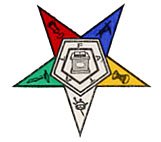
I'm actually not one to stand up against Pentagrams. In fact, there was one on my own wedding invitation. But, I know a lot of good men would be put off by such a prominent depiction of a pentagram above a throne in a society they are considering joining. But wait, the Pentagram isn't part of the Masonic furnishings... The only thing I can think of, is that OES had an Eastern Star pentagram suspended above the Master's chair. Probably unlit, but it attracted preening eyes of the reporter more than the letter-G (most likely mounted above the pentagram). Since Lodge wasn't opened, neither one was lit. This has now been published and raises red flags for anyone who reads it and has only the popular understanding of the symbol in mind.

Should we try to disassociate with OES and get it out of our lodges? Or maybe we should require OES's pentagram to be draped with a covering when not in use so that it does not create confusion, nor distract from Masonic degree work.

Saturday, July 15, 2006

Masonic Color Analysis

The cones in the human eye are primarily responsible for the recognition and distinction of colored light, (whereas the rods are primarily responsible for levels of light in general, whence brightness is derived) and the blue cone in the human eye is the least sensitive of these, followed by red, and then green.
In our Masonic journey we figuratively start in a "condition of darkness" and in answer to our desire for light we are given Blue Light, as Blue is the principal color of the three degrees of Ancient Craft Masonry.
If we proceed to the Chapter of Royal Arch Masons, colloquially known as "Red Lodge", we are met with the next level of light.
Combining these two lights together, the Council of Cryptic Masons gives us Purple, and a binary pattern is confirmed.
ColorBlueRedGreen
Black---
BlueX--
Red-X-
PurpleXX-
Green--X
TealX-X
Yellow-XX
WhiteXXX


White could be understood as the Celestial Lodge Above, where the Great White Throne may be found. But my question for the contemplative Mason is: Where are the Green, Teal, and Yellow Lodges?